
Reading Roundup: June 2026


Recently we’ve read:
The Frackers: The Outrageous Inside Story of the New Billionaire Wildcatters by Gregory Zuckerman
The Professor, the Banker, and the Suicide King By Michael Craig
The Frackers: The Outrageous Inside Story of the New Billionaire Wildcatters by Gregory Zuckerman
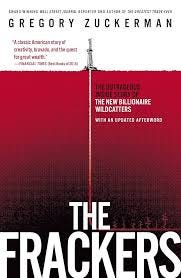
The Frackers tells the story of three wildcatters—George Mitchell, Aubrey McClendon, and Harold Hamm—who pioneered hydraulic fracturing and horizontal drilling. Their approach was highly unorthodox at the time, but, once proven, changed the global energy landscape and geopolitical balance of power.
The book reads like a novel, leaning into the characters more than the science. For a generalist like me, it provided sufficient background knowledge.
There were two themes that stood out. The first was the importance of a can-do entrepreneurial spirit that does not take “no” for an answer. There is a reason Exxon and Chevron did not pioneer fracking—they’re too risk adverse. They already have fantastic businesses and do not want to risk their capital on lottery-ticket style payoffs. That left the opportunity to smaller, scrappier, headstrong entrepreneurs. Though these oil men were warned time and again that they would fail (and they did fail, sometimes for years), they kept at it and eventually succeeded.
The second theme is about capital efficiency. Oil and gas is capital intensive. Leasing land requires upfront commitments for uncertain payoffs. The more likely people believe that there is oil and gas below the surface, the more expensive leases are. The best deals therefore occur when the oil company has a correct and differentiated view, perhaps because of superior technology.
Harold Hamm, founder of Continental Resources, chose to finance his company conservatively, always paying cash for its land leases. Aubrey McClendon took the opposite approach at Chesapeake Energy, spending lavishly to amass as much land as possible. That Continental is still around and Chesapeake went bankrupt in 2020 tells you everything you need to know about flying too close to the sun.
The Frankers was published in 2013, before the 2015 oil bear market. That bear market was directly caused by excessive production from fracking companies like those profiled. It is a lesson that what may be smart and value-accretive in the beginning may be dumb and destructive in the end. The first companies to frack earned huge ROIs. Those that chased the boom at the end experienced massive losses.
Matt
Churchill: Walking With Destiny by Andrew Roberts
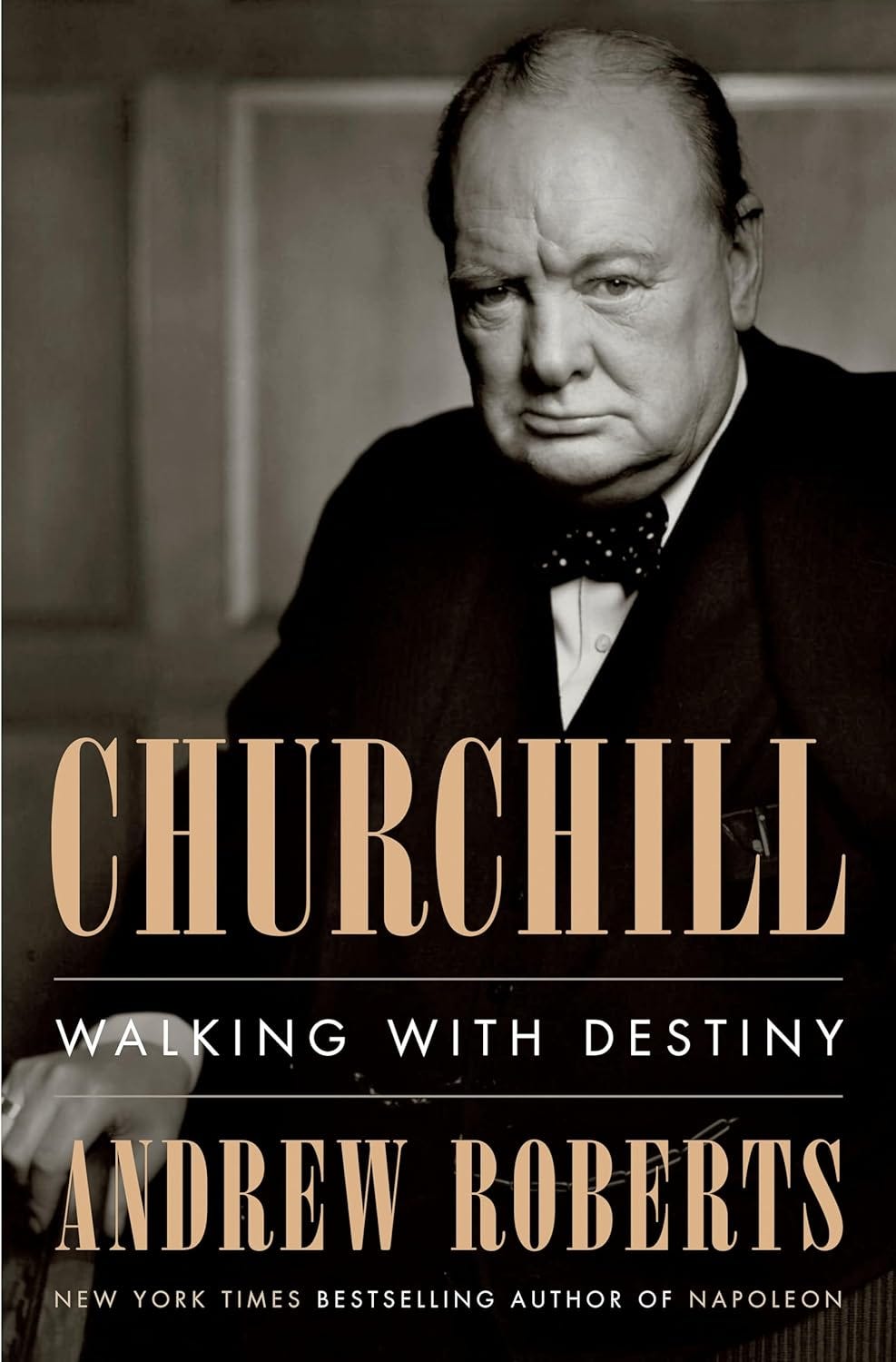
Reading biographies of those that lived in the Victorian era/Gilded Age through World War II is one of my favorite things to do. There was an incredible number of history-shaping events and trends from the late 1800s through the second world war. From robber barons building industrial monopolies to two world wars, a crippling depression, and countless panics, booms and busts, failing to closely study this time period almost feels criminal.
Winston Churchill was an important character through this entire time period and ranks up there as one of history’s most important figures. From a very early age Churchill sensed that his life would be extraordinary. As a teenager, Churchill foretold the challenges he would face later in life, saying;
London will be in danger... it will fall to me to save the Capital and save the Empire.
He was right. Churchill’s life was characterized by a series of setbacks and triumphs, all of which built into a crescendo of leading Great Britain through World War II. Churchill greatly admired his father, himself a prominent politician, but was never able to earn his approval before he passed away when Churchill was just 20 years old.
After graduating from the military academy he was determined to make a name for himself in the military. He quickly did just that by demonstrating tremendous bravery, bordering on stupidity. Churchill actively sought out danger to build his reputation. Always the first to volunteer to be deployed, he led daring frontline attacks in India in 1897. He partook in a reckless cavalry raid in Sudan in 1898 where he wound up surrounded and outnumbered and had to rapidly fire his pistol at point blank range to escape. In South Africa in 1898 Boer forces ambushed a train he was on. Instead of retreating he help free wounded men and ended up captured. He later made a daring escape across enemy territory.
Whether brave or plain stupid, acts like these quickly earned Churchill the reputation he sought. He also became a famous author after documenting his battlefield exploits which led to a prolific writing career for the rest of his life. The earnings from his books and articles was his financial lifeline during the depression when he nearly went broke.
One other aspect that Churchill developed early and stood out throughout his career was his masterful skills of oration. He was legendary for his recorded addresses to parliament and the public throughout his time in office, and he gave over 2,300 speeches in his career. His ability to rouse support were instrumental during WW II and I’d highly recommend listening to any number of his addresses during the war or his famous iron curtain speech.
In 1900 Churchill moved into government and held a number of posts over the next 30 years. This initial stint in government culminated when he served as First Lord of the Admiralty during WWI. He modernized the Royal Navy and displayed great leadership skills during the way but suffered a major setback when he orchestrated the Dardanelles and Gallipoli naval campaigns which resulted in significant defeats. He was effectively demoted after this and served in a few other positions before his party was defeated and he entered his “wilderness years”.
Churchill was out of the government for most of the 1930s, but remained one of the sole outspoken opponents of the British government’s appeasement of Hitler as he rose to power in Weimer Germany. Long in favor of rearmament and militarization, he was dismissed as a warmonger until it was almost too late. When England finally declared war on Germany in 1939 Churchill was summoned back into government which paved the way for his eventual election as prime minister 8 months later.
Throughout the war Churchill displayed his characteristic tenacity, doggedness, and eternal belief Britain wouldn’t suffer defeat. It didn’t look good for the Allies for many years, but Churchill knew if Britain could find a way to hold on until the U.S. entered the war there was no way Germany would come out victorious. He worked relentlessly, visited the frontlines, stood on his roof watching the battle of London, and made countless daring trips across Europe to meet with other leaders all while smoking 10+ cigars per day and consuming mass quantities of champagne and scotch with water - his “papa cocktail”.
Churchill was key in brokering alliances between Stalin and Roosevelt and instrumental in crafting the Allied path to victory, and there’s no telling what the western world would look like today if not for Churchill’s leadership during this formative age.
-Dan
The Professor, the Banker, and the Suicide King By Michael Craig
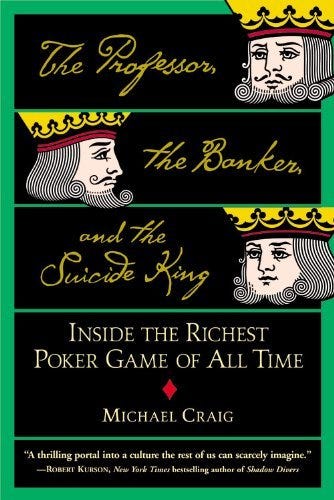
The books I’ve learned the most from have been about high-performing individuals, particularly businesses men with an “Outsider” approach. I wanted to study billionaire banker Andy Beal, but there is frustratingly little written about him. This book is one of the few that touch on him.
Born in Lansing, Michigan (not far from EPC’s office in Grand Rapids, MI), Beal was an entrepreneur from the get go. According to Wikipedia, “As a teenager, Beal began earning money by fixing and reselling used televisions with the help of his uncle. While attending high school he also installed apartment security systems. He also started a business moving houses and managed rental properties.”
The book explains how Beal got his start in real estate, buying, renting, and flipping apartments in Lansing. He dropped out of Michigan State in 1976 to pursue real estate full time. In search of a deal, he ended up at a federal foreclosure auction in Washington D.C. On a whim, he pivoted from bidding on apartments in Gulfport, MS to a distressed property in Waco, TX.
To his own shock, his own low-ball bid of $217,500 won. He had never seen the property. Beal put up just $17,500 of his own cash and secured a $200,000 loan to cover the rest. He moved to Waco and began fixing it up, often with his own two hands. Three years later in 1979 he sold it for $1 million.
Beal went on to perfect this playbook in the early 80s. In 1981 he bought two abandoned housing project buildings in Newark, New Jersey (the Brick Towers) for $25,000 and flipped them for $3.2 million two years later.
In the late 80s the Savings and Loan (S&L) Crisis unleashed a flood of foreclosed real estate. The government created the Resolution Trust Corporation (RTC) to liquidate it, and Beal was a frequent buyer.
Beal had more deals than he had capital, and access to attractive financing was the limiting factor. He realized that he could opened his own state-chartered, FDIC-insured bank and raise cheap, stable capital from the public via CDs.
Beal launched Beal Bank in 1988 with $3 million of his own money. Today it has $3.8 billion equity and Andy Beal remains the sole owner. He has never sold a share and does not intend to take it public.
This book focused on poker, one of Beal’s hobbies. Beal regularly flew to Vegas to play a consortium of pro poker players to test his skills. To skew the odds in his favor, he would insist the games start at 8 AM, ungodly early for the pros, who were often playing cash games until sunrise. He also insisted in playing heads up (one on one), and at extraordinarily high stakes. Millions would change hand every hand. This was change to Beal but meaningful even to Vegas’s wealthiest poker pros. Beal even developed methods to hide his emotions and randomize his raises to make himself unreadable.
These show how competitive Beal is and how good Beal is at thinking about risk and reward probabilistically, critical skills for any investor.
Matt
Build the Life You Want by Arthur Brooks
A few months ago I attended a lunch at which Arthur Brooks was the guest speaker. He teaches one of the most popular classes at Harvard called “Leadership and Happiness”. After his talk I immediately bought his recent book, Build the Life You Want.
Brooks explains that he is not innately a happy person. All his life he’s had to work to understand what makes people happy and try to apply the lessons to his own life. What he realized is happiness cannot be a goal, it’s an outcome. You can’t seek out happiness, but if you understand the ingredients, you can create circumstances where happiness and satisfaction are the result.
Brooks spends much of the book elaborating on what he refers to as the three “macronutrients” of happiness. After studying countless people and analyzing what underlies their happiness or lack thereof, he concluded that true well-being depends on having:
Enjoyment; which he defines as pleasure paired with meaning. Pleasure by itself is fleeting and ultimately unsatisfactory. Anything that brings pleasure with meaning or with some level of work or effort is not likely to aid in producing a happy life.
Brooks uses the example of eating. Gorging on junk food while scrolling through your phone may provide fleeting pleasure, but you’ll probably feel terrible later. Conversely, consider preparing a Thanksgiving meal with family and sitting around the table eating and making memories, this goes beyond the pleasure of the food and is instead an example of enjoyment.
Satisfaction; or the joy of working hard and achieving a goal. Whether you work hard to climb a corporate latter, work equally hard raising a family, are hammering away at a PhD thesis, or are training for an ultramarathon, everyone needs to be able to connect the work they do with an outcome they are trying to achieve. Meaningless work is a grind, and success without work feels empty. Satisfaction is the marriage of hard work and tangible progress.
A pertinent example of empty vs. true satisfaction is using AI to create something. Empty pleasure is asking AI to generate an image of something for you. It takes three seconds and takes almost no effort. Spending weeks sketching, painting, re-painting, and grappling with a portrait of your favorite summer vacation spot is a lot different. The real work it takes to create something meaningful is as much the point of the exercise as the end product. This is how satisfaction works.
Purpose; or the existential direction and reason for our life. Satisfaction is about what you achieve and purpose is about why you are here. Having a sense of purpose is the main reason suffering can be more easily endured. In fact, Brooks argues that finding meaning and direction in suffering often makes us happier compared to if the suffering never happened in the first place. Once again, you can find purpose in your work, in your family or friends, or in the community, and most of us have more than one purpose.
Brooks writes that finding a sense of purpose requires coherence (you need to step back and make sense of suffering and finding a coherent identify), direction (having goals in some area of your life), and significance (a belief that life matters).
The key is to find your purpose, work hard at bettering yourself towards the purpose, which will bring high levels of enjoyment to your life. Brooks’ books are easy to read and I always come away feeling more positive and energized.
-Dan
The Best Of The Rest
Barron's: 5 Signs the Semiconductor Rally is Getting Silly
“In the last 25 trading sessions, the benchmark advanced nearly 54%, its best rolling 25-day performance since March 9, 2000, when it rose 56% at the peak of the dot-com bubble, according to Dow Jones Market Data. Between the end of March 2000 and the final trading day in September 2002, the index sank 80%.”
Cal Newport: The Dangers of “Vibe Reporting” About AI
“The goal of this type of article is to create a pre-ordained vibe, not to get to the bottom of what’s really happening.”
Construction Physics: Do Commodities Get Cheaper Over Time?
“Labor-intensive services (education, healthcare) get more expensive in inflation-adjusted terms over time, while manufactured goods (TVs, toys, clothing) get less expensive over time.”
Bloomberg: The Utilities Analyst Who Says the Data Center Demand Story Doesn’t Add Up
“In a new report, CreditSights analysts led by Andy DeVries crunch the numbers to show that US utilities already appear to be in the process of building twice as much power capacity as is currently forecast to be needed by 2030. In other words, the data center buildout already looks to be outstripping demand for compute.”
See also: CreditSights: Utilities: The Great Data Center Overbuild
The Coal Trader: Adding To My NRP Position
NRP is on track to be debt free in 2026 and substantially increase distributions. The stock should re-rate towards pipeline MLP multiples.
See also: Natural Resource Partners: High Uncertainty, Low Risk
Fortune Financial: The Traits of an Ideal Industry
Industry structure can have a significant impact on a business’s long-term performance.
Institutional Investor: Now Top Investors Are Doubting the AI Revolution
“Looking back at major technological booms, from railroads to the internet to shale, you see similar patterns emerge over time… Equity investors have not always seen returns that match early expectations.”
Cal Newport: Why Hasn’t AI Made Work Easier?
WSJ: AI Isn’t Lightening Workloads. It’s Making Them More Intense.
Do you have a “stranded” 401(k) from a past job that is neglected and unmanaged? Eagle Point offer separately managed accounts to retail investors, and 401(k) rollovers are often a good fit for our long-term approach. If you would like to invest with Eagle Point Capital or connect with us, please email info@eaglepointcap.com.
Disclosure: The author, Eagle Point Capital, or their affiliates may own the securities discussed. This blog is for informational purposes only. Nothing should be construed as investment advice. Please read our Terms and Conditions for further details.